

Thought St Patrick was Irish? WRONG he was Welsh
- These Isles by Brian Groom (HarperNorth £20, 288pp)
The Scots originally came over from Ireland, displacing the native Picts, The Picts themselves spoke a language closest to Cornish and Welsh. In the 17th century some Scots went back to Ireland, to the Ulster plantations.
The Irish often invaded and settled in both Wales and Cornwall, the English settled in all three other countries, Ireland’s patron saint Patrick is probably Welsh, or possibly from Cumbria, while Scotland’s Saint Columba came from Donegal…

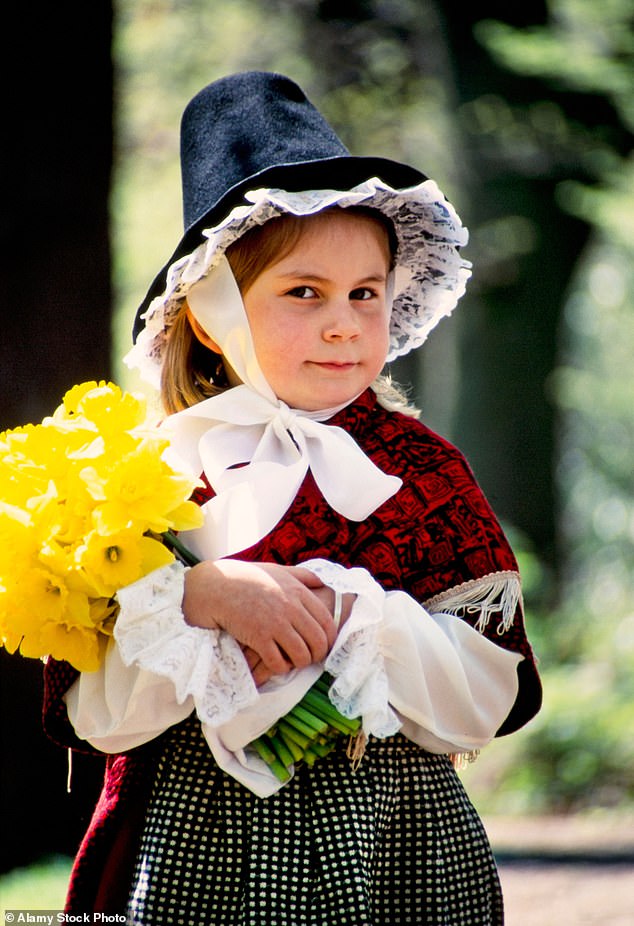
Luck of the Welsh…: Evidence suggests that St Patrick was actually from Wales
Given all these comings and goings, a combined history of these four fascinating and turbulent nations makes sense, and that’s just what Mancunian author Brian Groom has so entertainingly provided, starting around 900,000BC when the oldest surviving human footprints outside of Africa were made at Happisburgh in Norfolk.
Today, the descendants of these isles number around 200 million worldwide, including Barack Obama and Muhammad Ali, both of whom have Irish blood.
And yet what to call them? ‘British Isles’ displeases the Irish, not surprisingly given what they have experienced at British hands over the centuries. One suggestion is the ‘Anglo-Celtic Isles’, which certainly sounds romantic as well as pretty accurate.
The book offers an exhilarating bird’s eye view of these four nations, shifting our attention away from London, from kings and parliaments, and moving us further west and north, with an imaginary centre perhaps somewhere around Anglesey, or the Isle of Man.
The language of one small tribe, the Anglo-Saxons, is now spoken by an incredible 1.5 billion around the world, thanks to the British Empire – among whose ebullient builders we find just as many Irish and Welsh as English, and a positive embarrassment of Scots.
The American Declaration of Independence was signed by men of all four nations, including several Irishmen. And one of the Empire’s worst misdeeds, the Amritsar massacre, was ordered by an Irish officer.
The Empire was firmly based on the foundations of our Industrial Revolution, the world’s first, almost entirely fuelled by ‘Welsh coal’ says Groom, and with ingenious Scotsmen playing an outsize role, from James Watt (steam engine) to Thomas Telford (roads).
A salient characteristic of these islanders seems to be a kind of heroic restlessness, even a certain bolshiness. One still feels rather proud of the fact that it took a tenth of Rome’s colossal legionary armies to control us, an area less than a 30th of its Empire.
The overwhelming impression you are left with is that whether we retain political union, or decide to separate, it hardly matters very much, given the millennia of shared history and kinship, cultural endeavour and world exploration. It’s a wonderful tribute to the Anglo-Celtic isles.
And perhaps we are now reverting to our ancient roots more than we know – for ‘Britain’, after all, derives from Pretani, the name the original pre-Roman islanders gave themselves, meaning the painted or tattooed people.