


Do They Really Work Or Is It Just Marketing?
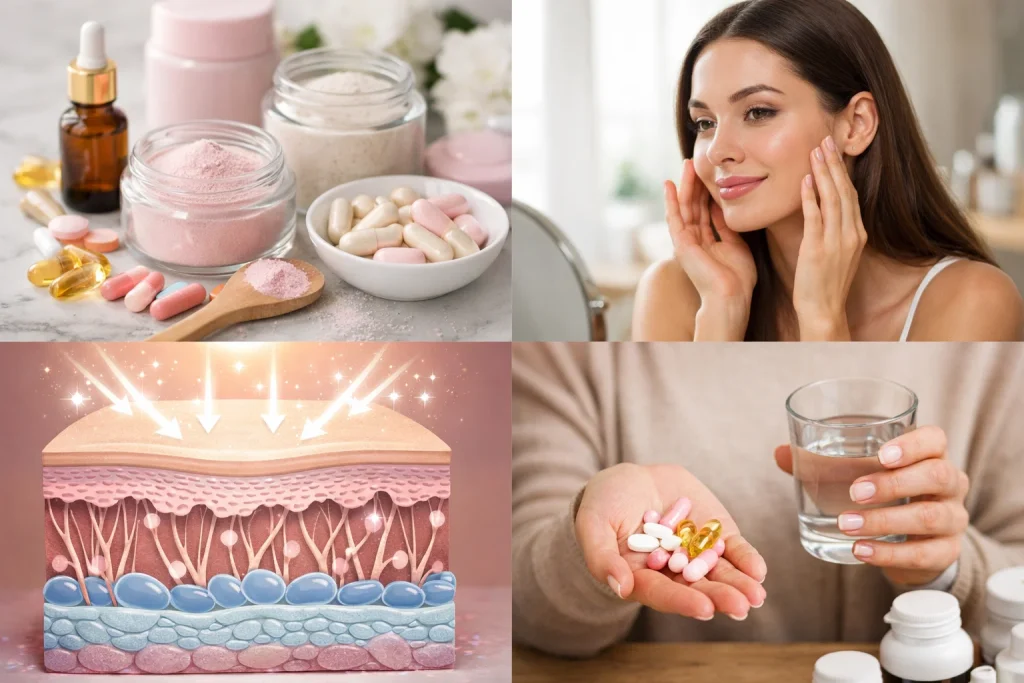
The beauty industry is currently experiencing an unprecedented boom in beauty supplements, with promises ranging from glowing skin to healthier hair. But with so much hype surrounding these products, the question remains: Do beauty supplements actually work, or is it simply clever marketing?
Why Everyone Is Suddenly Taking Beauty Supplements
The Rise of “Beauty From Within” Culture
The “beauty from within” culture emphasizes that skincare is not just about topical creams but also about nourishing the body with the right nutrients. This holistic approach sees beauty as an inside-out job, making beauty supplements like collagen supplements increasingly popular.
Why This Trend Is Exploding on Social Media
Social media platforms are flooded with influencers promoting beauty supplements, showcasing supposed transformations, and fueling the trend. Before-and-after photos and glowing testimonials drive curiosity and the desire to improve skin, contributing to the exploding popularity of taking supplements.
The Big Question: Science or Marketing Hype?
The central question is whether the promises of beauty supplements are backed by solid scientific evidence or are merely marketing ploys. Are these supplements delivering real results for skin and nails, or are they exploiting our desire for flawless, healthy skin?
What Are Beauty Supplements? (Clear Definition)
Overview of Nutricosmetics and Beauty-From-Within Products
Nutricosmetics are dietary supplements designed to enhance beauty. These beauty-from-within products aim to improve skin hydration, reduce wrinkles, and promote healthier hair by delivering essential nutrients directly into the body, working at the cellular level.
Common Types: Collagen, Biotin, Hyaluronic Acid, Antioxidants
Here are some common beauty supplements, each associated with specific benefits:
- Collagen, often promoted to improve skin elasticity and reduce the appearance of wrinkles.
- Biotin, which many believe promotes hair growth and nail strength.
- Hyaluronic acid, known for its skin hydration properties.
- Antioxidants like vitamin C, which can combat premature skin aging.
How They Are Marketed to Consumers
Beauty supplements are often marketed with persuasive language and imagery. Advertisements highlight benefits like glowing skin, shiny hair, and stronger nails, using testimonials and endorsements to create a sense of trust and encourage consumers to use supplements.
The Science Behind Beauty Supplements
How Nutrients Affect Skin, Hair, and Nail Health
Nutrients play a vital role in maintaining the health of skin, hair, and nails. Vitamins, minerals, and amino acids support cell turnover, collagen production, and overall structural integrity, contributing to resilient skin and reducing dryness.
Collagen Synthesis and Skin Aging
Collagen is a crucial protein that provides structure and elasticity to the skin. As we age, collagen synthesis naturally declines, leading to wrinkles and sagging skin. Collagen supplements aim to replenish these stores and improve skin aging.
Role of Vitamins and Minerals in Cellular Repair
Vitamins and minerals like zinc, vitamin C, and vitamin E are essential for cellular repair and protecting against oxidative stress, which contributes to premature skin aging. These nutrients support the body’s ability to maintain and repair skin cells, promoting overall skin quality.
What Science Actually Says (Evidence-Based Reality)
Which Ingredients Show Real but Limited Benefits
Some ingredients in beauty supplements, such as collagen and vitamin C, have shown real but limited benefits in clinical studies. These benefits often include improved skin hydration and elasticity, but the extent of these improvements can vary.
What Clinical Studies Actually Prove (and Don’t Prove)
Clinical studies on beauty supplements often have limitations, such as small sample sizes or biased funding, which can affect the results. While some studies show promise, they don’t always prove definitive benefits or long-term effects of taking supplements.
Why Results Vary From Person to Person
Results from beauty supplements can vary significantly from person to person due to differences in genetics, diet, lifestyle, and overall health. Factors like nutrient deficiencies and existing skin conditions can also influence how effective supplements actually are.
When Beauty Supplements Actually Work
Nutrient Deficiency and Visible Improvement Cases
Beauty supplements can be effective when addressing a nutrient deficiency. For example, individuals deficient in biotin might experience improved hair growth and stronger nails after starting biotin supplements. In such cases, the supplements work to correct a specific imbalance, leading to visible results in skin and nails.
Skin Conditions That May Benefit From Supplementation
Certain skin conditions may benefit from specific supplementation. Those with inflammatory skin conditions or dryness might find relief with fatty acids or vitamin C supplements, which play a role in skin health. However, consulting a board-certified dermatologist is crucial before taking supplements for skin issues like acne or eczema.
Importance of Dosage, Quality, and Bioavailability
The efficacy of beauty supplements greatly depends on dosage, quality, and bioavailability. Taking supplements with the correct dosage ensures that the body receives an adequate amount of nutrients to support skin elasticity and overall skin quality. High-quality supplements with good bioavailability are better absorbed, improving their effectiveness.
When Beauty Supplements Don’t Work
No Deficiency = Minimal Visible Results
If there is no underlying nutrient deficiency, taking beauty supplements may yield minimal visible results. For example, if someone already consumes a balanced diet rich in vitamins and minerals, adding extra supplements may not significantly improve skin and nails or enhance hair growth.
Overhyped Claims in Marketing Campaigns
Marketing campaigns often overhype the benefits of beauty supplements, promising unrealistic outcomes such as instant glowing skin or complete wrinkle removal. These claims are frequently exaggerated and not supported by scientific evidence. Many products tout collagen supplements, but the results can be misleading.
Expectation vs Reality Gap
The gap between expectations and reality with beauty supplements can be significant. Consumers may expect dramatic improvements in skin and nails, but the actual results might be subtle or nonexistent. This discrepancy often leads to disappointment, especially when the individual is already doing proper skincare.
The Marketing Engine Behind the Beauty Supplement Boom
Influencer Marketing and Social Proof Psychology
Influencer marketing plays a substantial role in the beauty supplement boom. Social proof psychology drives consumers to use supplements based on the endorsements and testimonials of influencers with seemingly flawless skin. This creates a perception of effectiveness, even if the beauty industry lacks strong evidence.
“Glow Culture” and Aesthetic Pressure on Social Media
“Glow culture” on social media intensifies aesthetic pressure, pushing individuals to seek unattainable beauty standards. This environment drives the demand for beauty supplements, with the promise of achieving radiant, youthful skin, despite the potential lack of real benefits to improve skin.
Branding Strategies in the Wellness Industry
Branding strategies in the wellness industry capitalize on the desire for self-improvement and beauty, offering dietary supplements packaged as essential for achieving glowing skin and healthier hair. These strategies often emphasize the “beauty from within” concept, encouraging consumers to take supplements as part of their daily routine.
Beauty Supplements vs Skincare: What Matters More?
Internal Nutrition vs External Skincare Routine
While internal nutrition through supplements is important, a consistent external skincare routine is often more effective. Topical treatments, including vitamins and creams containing antioxidants, directly address skin concerns like lines and wrinkles, skin aging, and dryness, whereas supplements impact overall health.
How Lifestyle Factors Outperform Supplements
Lifestyle factors such as hydration, sleep, and stress management often outperform supplements in improving skin health. Adequate sleep and hydration support resilient skin and overall well-being, while managing stress can prevent premature skin aging and improve skin quality.
The Balanced Approach: Skin Health Ecosystem
A balanced approach to skin health involves both internal nutrition and external skincare. This skin health ecosystem integrates a healthy diet rich in vitamins and minerals, targeted skincare treatments, and lifestyle choices to maintain resilient skin and a healthy complexion. Combining these elements often yields better results than relying solely on beauty supplements.
Risks, Side Effects, and Misuse Concerns
Over-supplementation poses risks, leading to nutrient imbalances. Excessive intake of certain vitamins, like fat-soluble vitamins, can accumulate in the body, causing toxicity. Imbalances can also disrupt the absorption of other essential nutrients. It’s crucial to consult with a healthcare professional or a board-certified dermatologist before taking supplements.
Fake Claims and Low-Quality Products
The beauty industry is rife with fake claims and low-quality beauty supplement products. Many dietary supplements make unsubstantiated promises of instant results, often without scientific backing. Consumers should be wary of products lacking third-party testing or clear ingredient labeling, to avoid the potential adverse effects of unregulated ingredients.
Regulatory Gaps in the Supplement Industry
Regulatory gaps in the supplement industry are a significant concern. Unlike pharmaceuticals, beauty supplements are not subject to rigorous pre-market approval by the Food and Drug Administration (FDA). This lack of oversight allows for potentially unsafe ingredients or misleading claims, emphasizing the need for cautious and informed consumer choices regarding supplement usage.
Who Actually Benefits From Beauty Supplements?
People With Nutritional Deficiencies
Individuals with diagnosed nutritional deficiencies can significantly benefit from beauty supplements. For example, those with a biotin deficiency may experience improved hair growth and nail strength after taking biotin supplements. Beauty supplements can help correct these imbalances and support skin and nails.
Individuals With Skin or Hair Health Issues
Certain individuals with specific skin or hair health issues, like excessive dryness or hair loss not caused by hormonal imbalances, may find some benefit in taking supplements. Specific ingredients, including vitamins and fatty acids, may play a role in alleviating these symptoms and supporting overall skin quality and healthier hair.
Age-Related Collagen Decline Cases
Age-related collagen decline is a natural process that can lead to lines and wrinkles and reduced skin elasticity. Collagen supplements, which come in forms like powder and capsules, aim to replenish collagen levels in the body, potentially improving skin elasticity and hydration. However, results can vary, and it’s essential to manage expectations.
Smarter Alternatives to Beauty Supplements
Nutrition-Based Beauty (Whole Foods Approach)
Adopting a nutrition-based beauty approach, focusing on whole foods rich in vitamins and minerals, is a smarter alternative to relying solely on supplements. This involves consuming a balanced diet to ensure adequate intake of essential nutrients, including vitamins and antioxidants that support skin and overall well-being, rather than just taking a multivitamin.
Hydration, Sleep, and Stress Management
Prioritizing hydration, sleep, and stress management can significantly impact skin health, often outperforming the effects of beauty supplements. Adequate hydration maintains skin elasticity, while sufficient sleep and stress reduction prevent premature skin aging and support resilient skin and the health of your skin cells.
Evidence-Based Skincare Ingredients
Opting for skincare products with evidence-based ingredients like vitamin C, antioxidants, and sunscreen is a smarter approach than relying solely on beauty supplements. These topical treatments directly target skin concerns, protecting against UV damage and promoting resilient skin and youthful skin and nails.
The Future of Beauty Supplements
Personalized Nutrition and DNA-Based Supplementation
The future of beauty supplements points toward personalized nutrition and DNA-based supplementation. These approaches aim to tailor supplement recommendations based on an individual’s genetic predispositions and specific nutrient needs, potentially improving the effectiveness and safety of supplements. These recommendations may also change the vitamins you ingest.
AI-Driven Beauty Health Recommendations
AI-driven beauty health recommendations may soon revolutionize the beauty industry, offering personalized supplement suggestions based on individual health data and skincare needs. These AI systems can analyze various factors, including lifestyle, diet, and skin concerns, to provide tailored advice on which dietary supplements may be most beneficial for achieving glowing skin.
Science-Backed Formulations vs Marketing Products
The future hinges on a shift toward science-backed formulations rather than marketing-driven products. More rigorous scientific research, including studies on the efficacy and safety of various supplements, will help consumers make informed choices about their skincare and nutrition, ensuring that products deliver real benefits and maintain skin elasticity.
Final Verdict: Science vs Marketing in the Beauty Supplement Boom
In the beauty supplement boom, distinguishing between scientific evidence and marketing hype is crucial. While certain supplements, like collagen, may offer some benefits, a balanced approach that includes proper skincare, a healthy diet, and lifestyle management is essential for achieving and maintaining resilient skin and overall healthier hair.