


Simple Exercises And Daily Habits That Actually Work
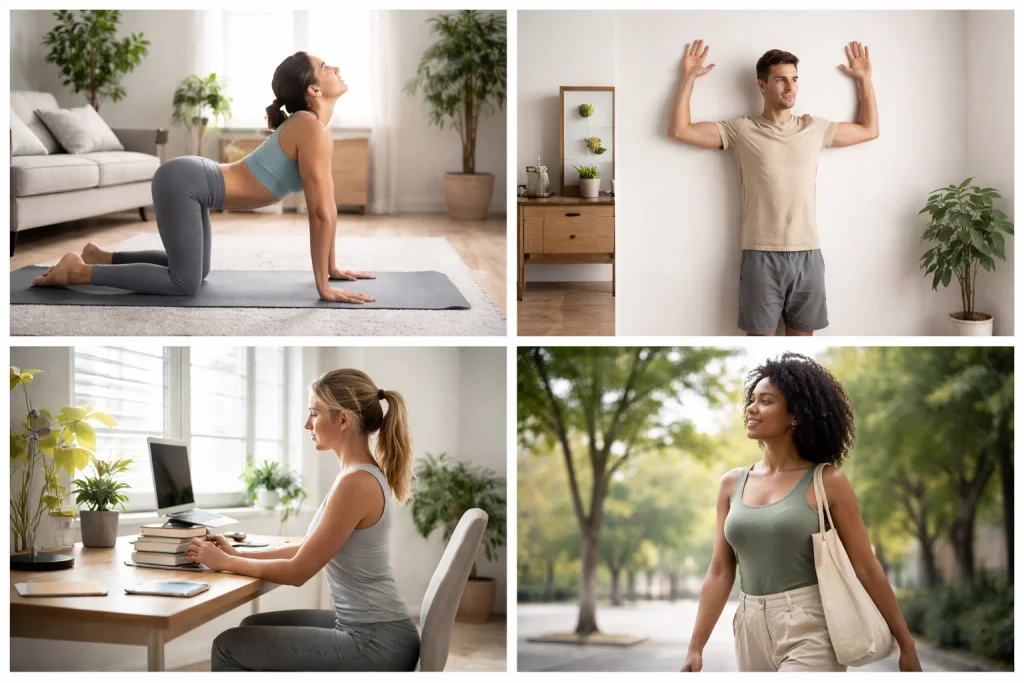
Are you ready to transform your posture and feel more confident? This comprehensive guide will give you simple exercises and daily habits that will actually work, so you can finally improve posture and maintain good posture naturally.
Why Good Posture Matters More Than You Think
The Impact of Poor Posture on Your Spine, Muscles, and Joints
Poor posture can wreak havoc on your spine, muscles, and joints. When you slouch, your spine is not in proper alignment, which puts extra stress on your spinal discs and can lead to back pain and neck pain, as well as other posture problems.
How Posture Affects Breathing, Digestion, and Energy Levels
Believe it or not, posture is how you hold your body while sitting or standing and can greatly impact how well you breathe, digest food, and maintain energy levels, because poor posture can restrict these vital functions.
The Confidence and Psychological Benefits of Standing Tall
Standing tall with correct posture does wonders for your self-esteem. When you improve posture, you project confidence, making a positive impression, which can help improve social interactions and enhance your overall psychological well-being significantly.
What Causes Poor Posture? (Root Problems Most People Ignore)
Weak Core and Glute Muscles
Weak core muscles and glute muscles are key contributors to poor posture. These muscles are essential for supporting your spine and pelvis, and when they’re weak, it’s harder to maintain good posture throughout the day.
Tight Chest and Hip Flexors
Tightness in the chest and hip flexors often leads to slumped shoulders and an anterior pelvic tilt. Addressing this tightness through stretching is crucial to help improve your posture and restore proper alignment in your upper back.
Tech Neck and Forward Head Posture
Spending too much time looking down at devices contributes to tech neck and forward head posture, straining your neck muscles. Counteract this by holding screens at eye level and practicing neck retractions to improve posture naturally.
Long Sitting Hours and Sedentary Lifestyle
Long hours of sitting and a sedentary lifestyle can significantly impact your posture. Without regular movement, your muscles weaken, and you’re more likely to slump. Remember to take frequent breaks to help improve your posture.
Stress and Emotional Posture Patterns
Stress and emotional states can manifest as physical posture patterns. Notice if you tend to hunch your shoulders when stressed. Being mindful of these connections is the first step to adopting better posture habits and ways to improve your posture.
How to Assess Your Posture at Home (Quick Self-Tests)
The Wall Test for Alignment
Stand with your back against a wall. Ideally, your head, upper back, and buttocks should touch the wall. If there’s a large gap between your lower back and the wall, it may indicate posture problems and lead to poor posture.
Side-Profile Mirror Check
Stand in front of a mirror and view yourself from the side. A good posture side view exhibits a straight line from your ear to your shoulder, hip, and ankle. Note any forward head posture or slumped shoulders to help fix.
Signs You May Have Forward Head Posture
Forward head posture is evident if your ear is noticeably in front of your shoulder when viewed from the side. This misalignment puts extra stress on your neck and can lead to neck pain and other posture problems that impact your posture.
Signs of Anterior Pelvic Tilt
Anterior pelvic tilt is when your pelvis tilts forward, causing an exaggerated curve in your lower back. You might notice your stomach sticking out more than usual. Strengthening your core can help improve this misalignment, for overall posture.
The 4 Foundations of Natural Posture Correction
Strengthening Weak Muscles
The key to correcting poor posture involves targeted exercises to strengthen your core and back muscles. Focus on exercises that target the abdominal muscles, back muscles, and glutes to provide better support for your spine.
Stretching Tight Muscles
Flexibility is just as important as strength when it comes to better posture. Incorporate stretches that target tight chest muscles, hip flexors, and hamstrings to restore balance and improve your range of motion, ways to improve posture naturally.
Improving Daily Movement Patterns
Pay attention to how you move throughout the day. Practice proper posture while sitting and standing to support your spine. Make small adjustments to your daily habits to reinforce a correct posture naturally as possible.
Building Postural Awareness
Cultivating body awareness is crucial for long-term posture correction. Regularly check your posture throughout the day and make adjustments as needed. This mindful practice helps you maintain good posture and prevent slouching posture.
Best Exercises to Improve Posture Naturally
Core Strengtheners (Planks, Dead Bugs, Bird Dogs)
To improve your posture, consider incorporating core strengthening exercises into your routine. These exercises will strengthen your core and provide better support for your spine. Some effective exercises include:
- Planks
- Dead bugs
- Bird dogs
These exercises target abdominal and back muscles and help maintain good posture throughout the day.
Upper Back Strength Exercises (Rows, Reverse Flys, Face Pulls)
Here’s how to counteract slouching posture and improve spinal alignment. It involves incorporating upper back strength exercises, including:
- Rows
- Reverse flys
- Face pulls
These movements strengthen your upper back muscles, pulling your shoulders back and promoting better posture.
Glute Activation Exercises (Glute Bridges, Squats, Lunges)
Here’s why glute activation is so important. Glute activation exercises, in particular, are essential to help improve your posture by:
- Supporting your pelvis.
- Supporting your lower back.
Strong glutes achieved through exercises like glute bridges, squats, and lunges contribute to a more upright and balanced posture while you sit and stand.
Neck Alignment Exercises (Chin Tucks, Neck Retractions)
Combat forward head posture with neck alignment exercises like chin tucks and neck retractions. These exercises help realign your head over your shoulders, reducing neck pain and strain while promoting better posture and neck alignment naturally, ways to improve posture naturally.
Posture Reset Movements (Wall Angels, Shoulder Blade Squeezes)
Practice posture reset movements like wall angels and shoulder blade squeezes throughout the day. These simple exercises improve body awareness, open up your chest, and remind your shoulders to stay back and down, for overall posture and alignment.
Daily Habits That Improve Posture Without Thinking About It
How to Sit Properly at a Desk (Ergonomic Setup Guide)
Create an ergonomic workstation to maintain good posture effortlessly. Position your monitor at eye level, support your lower back with a chair, and ensure your feet are flat on the floor. This arrangement can help improve your posture while you sit and stand.
Phone and Laptop Positioning to Prevent Tech Neck
Avoid tech neck by raising your phone and laptop to eye level when you use them. Use pillows or stands to support your device, reducing the need to constantly look down and strain your neck. This is an essential step to improve your posture.
How to Stand Correctly (Neutral Spine Guide)
When standing, strive for a neutral spine with your ears aligned over your shoulders, hips, and ankles. Engage your core and avoid locking your knees. Distribute your weight evenly to maintain good posture and prevent slouching posture.
Walking with Proper Alignment
Pay attention to your posture while walking. Keep your head up, shoulders back, and core engaged. Avoid slouching and focus on taking long, smooth strides. Mindful walking can significantly improve your posture and overall body awareness.
Sleeping Positions That Support Spinal Health
Choose sleeping positions that support your spine’s natural curve. Sleeping on your side with a pillow between your knees or on your back with a pillow under your knees can help maintain good posture even while you sleep. Avoid sleeping on your stomach.
5-Minute Daily Posture Routine for Busy People
Morning Posture Activation Routine
Start your day with a quick posture activation routine. Include exercises like shoulder rolls, chest stretches, and spinal twists to wake up your muscles and improve posture. This can set a positive tone for maintaining good posture throughout the day.
Midday Desk Reset Routine
Take a break from sitting with a midday desk reset routine. Perform simple stretches like neck rotations, wrist extensions, and seated spinal twists to alleviate tightness and improve posture and increase body awareness, for improved overall posture.
Evening Stretch and Release Routine
Wind down with an evening stretch and release routine. Focus on stretches that target tight chest muscles, hip flexors, and hamstrings to release tension and restore balance to your posture. This can help improve your posture.
How Long Does It Take to Fix Posture? (Realistic Timeline)
What to Expect in the First 2 Weeks
In the first two weeks of focusing on your posture, you may notice increased body awareness and some initial discomfort as your muscles adjust. Be consistent with your exercises and mindful of your sitting or standing posture to improve posture.
Changes After 30 Days of Consistency
After 30 days of consistent effort, you should start experiencing noticeable improvements in your posture. Your muscles will begin to strengthen, and you’ll likely find it easier to maintain good posture and overall posture, because you improve your posture.
When to Seek Professional Help
If you experience persistent back pain, neck pain, or other posture problems, it’s best to seek professional help. A physical therapist or chiropractor can assess your condition and provide personalized guidance to improve posture and spinal health.
Common Posture Mistakes That Slow Progress
Overcorrecting and Overarching the Lower Back
One of the common posture mistakes is overcorrecting the lower back, leading to overarching. This can strain the spine and back muscles, causing lower back pain. Instead, focus on a neutral spine alignment when trying to improve posture.
Relying Only on Posture Braces
Relying solely on posture braces is another mistake. While they may offer temporary support, they don’t strengthen your core muscles or promote lasting improvements in your body awareness. Focus on exercises to improve posture and build strength.
Ignoring Glute Strength
Ignoring glute strength can hinder better posture. Weak glutes contribute to pelvic instability, impacting your spine alignment. Include glute exercises to strengthen your core and help improve your posture while you sit and stand properly.
Doing Stretches Without Strength Training
Stretching without strength training can be ineffective. While stretching addresses tightness, it doesn’t provide the necessary support to maintain good posture. Combine stretches with exercises to improve posture and overall support for your spine and back muscles.
Posture Improvement for Specific Groups
Desk Workers and Remote Professionals
Desk workers and remote professionals often suffer from poor posture due to prolonged sitting. Creating an ergonomic workspace, taking frequent breaks, and practicing exercises to improve posture are essential. Pay attention to sitting or standing posture.
Moms Carrying Babies or Toddlers
Moms carrying babies or toddlers may develop poor posture due to the uneven weight distribution. Practicing mindful lifting techniques and strengthening back muscles can help improve posture and prevent back pain. Focus on maintaining good posture.
Teens and Smartphone Users
Teens and smartphone users are prone to tech neck and poor posture due to excessive screen time. Encourage them to hold devices at eye level, take breaks, and perform exercises to improve posture and counteract slouching posture naturally.
Older Adults Focused on Longevity
For older adults focused on longevity, maintaining good posture is crucial for mobility and independence. Exercises to improve posture like gentle stretches, strengthening your core, and mindful movement can help prevent falls and support spinal health to improve posture.
The Long-Term Benefits of Improving Posture Naturally
Reduced Chronic Pain
One of the significant long-term benefits of focusing to improve posture naturally is reduced chronic pain. By aligning your spine correctly and supporting back muscles, you alleviate strain on your spine, reducing back pain and neck pain effectively.
Improved Confidence and Body Language
Standing tall can significantly improve confidence and body language. When you maintain good posture, you project self-assurance, which can positively impact your personal and professional interactions to help improve your posture.
Better Athletic Performance
Good posture enhances athletic performance by optimizing alignment and movement efficiency. Proper posture allows for better breathing, core engagement, and reduces the risk of injuries, thereby improving your overall posture and athletic capabilities effectively.
Healthier Aging and Mobility
Maintaining good posture contributes to healthier aging and mobility. By supporting spinal health, strengthening your core, and practicing mindful movement, you can reduce the risk of age-related decline and improve posture and remain active and independent long-term.
Final Thoughts: Small Daily Changes Create a Stronger, Taller You
Incorporating small, consistent daily changes can lead to significant improvements in your posture and overall well-being. Be mindful of your sitting or standing posture, engage in regular exercises to improve posture, and prioritize spinal health to cultivate a stronger, taller you and improve posture.